9 Phone Parking Ritual Examples for Calmer Days
Your phone does not need to be the first thing your hand reaches for when you wake up, or the last glow your eyes absorb at night. A phone parking ritual is a small, repeatable moment that gives your device a place to rest and gives your mind a little more room. These phone parking ritual examples are not about being perfect, deleting every app, or pretending you do not need your phone. They are about making a softer choice when your attention feels stretched thin.
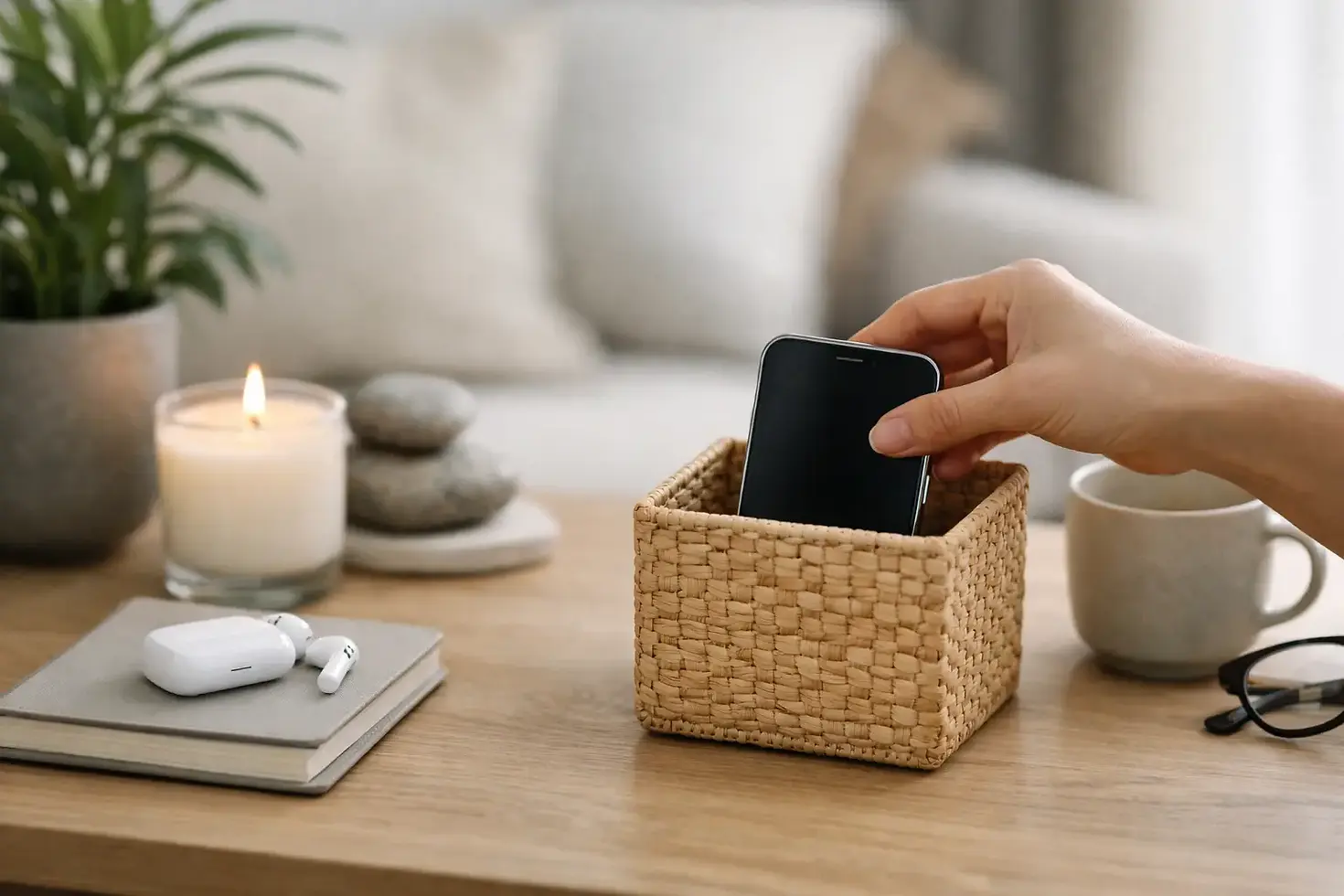
The ritual works best when the phone has a visible, inviting home. A colorful pillow, a small basket, a tray by the door, or a handmade phone holder can turn “put it down” from a vague intention into something your body can remember. Think of it as comfort for your phone and a reminder for your soul.
Why a phone parking ritual can feel so grounding
Many of us pick up our phones before we have checked in with ourselves. One notification becomes a text reply, then a headline, then twenty minutes that belonged to your morning coffee, your child, your work transition, or your own quiet thoughts.
Parking your phone adds a tiny pause between an urge and an action. That pause matters. Your nervous system gets a cue that it does not have to stay on alert every second. Over time, the place where you set your phone can become associated with a breath, a boundary, a meal enjoyed slowly, or a more restful bedtime.
There is a trade-off, of course. Some days you are on call for family, waiting on a school update, coordinating a pickup, or managing work responsibilities. A phone parking ritual is not a rigid rule. It is a caring agreement with yourself: when the phone does not need to be in your palm, it gets to rest somewhere else.
9 phone parking ritual examples to make your own
1. The one-breath arrival ritual
When you come home, place your phone in its designated spot before you begin unpacking bags, cooking, or answering anyone’s question. Let your shoulders drop. Take one full breath in and one slow breath out.
You can say, quietly or in your mind, “I am home now.” It may feel almost too simple, but that is the beauty of it. The ritual is not asking you to transform your whole life at the front door. It is simply marking the shift from outside demands to your own space.
If you live with others, let them know this is a brief landing moment, not a disappearing act. Five minutes of being unreachable can be enough to help you reenter your evening with more presence.
2. The dinner-table nest
Before a meal, put your phone in a soft holder or basket outside arm’s reach. Choose a place that is still easy to hear if you are expecting an urgent call, but not close enough for habitual checking.
As you set it down, notice one detail about the meal: the steam rising from a bowl, the brightness of a napkin, the person sitting across from you, or the fact that you made time to eat at all. This is especially kind on solo dinners, when scrolling can fill every quiet space before you have tasted your first bite.
A practical adjustment: if you use your phone for music, set the playlist first, then turn on Do Not Disturb. Your phone can support the mood without becoming the guest of honor.
3. The workday closing ceremony
At the end of the workday, write down the next one to three things you need to do tomorrow. Then park your phone near your workspace rather than carrying it into every room.
This ritual helps your brain stop trying to keep every unfinished task in the air. You have given tomorrow a note. You do not need to keep reopening your inbox to prove that you are responsible.
If your job requires occasional evening access, choose a check-in window instead of keeping the phone beside you all night. Maybe you look once at 7:00, then return it to its resting place. The goal is not to ignore your life. The goal is to let work have edges.
4. The bathroom mirror reset
A surprising amount of scrolling happens in the small in-between moments: brushing teeth, washing your face, waiting for conditioner to sit. Try parking your phone outside the bathroom for your evening routine.
Let the mirror become a place to meet your own eyes instead. As you moisturize or rinse your face, ask, “What do I need to soften tonight?” You do not have to solve the answer. You may just need water, clean pajamas, a laugh, a good cry, or sleep.
For people who use an app for sleep sounds, start it before you begin your routine and leave the phone in its chosen place. A little planning protects the calm you are trying to create.
5. The conversation companion ritual
When a friend, partner, or family member sits down to talk, place your phone face down in its little nest. Say something simple if needed: “I want to hear you without half-listening.”
This is not about performing perfect attention. We all get distracted. It is about making your care visible. The act of parking the phone tells the other person, and reminds you, that this conversation has a place in your day.
If the conversation is emotionally tender, consider putting the phone in another room for ten minutes. A device within reach can make it easier to escape discomfort before connection has had a chance to deepen.
6. The creative spark ritual
Before journaling, painting, knitting, stretching, or working on a personal project, give your phone a temporary bed. Then place a notebook, pen, or your chosen materials where the phone had been.
This swap is useful because hands follow what is available. If your phone is the closest object, you will probably touch it. If your journal is waiting in its place, you are more likely to write one honest sentence.
At Cell Phellow, a soft phone pillow can make this feel less like restriction and more like a tiny act of care. Your phone is not being punished. It is resting while you remember that you are allowed to make something without documenting it.
7. The anxious-scroll interruption
When you notice yourself checking the same app again and again, do not shame yourself. Your brain may be looking for reassurance, distraction, connection, or a sense of control. Park the phone for two minutes and give your hands something else to do.
Hold a soft comfort object, press your palms together, make tea, step outside, or place one hand over your chest. Then ask, “Am I looking for information, or am I looking for relief?” The answer can guide your next move.
Sometimes you really do need information. Check it with intention, then park the phone again. Other times, relief is more likely to come from a snack, a stretch, a text to one trusted person, or simply letting your eyes rest on something that is not a screen.
8. The bedtime handoff
Choose a phone parking place that is not your pillow, your nightstand, or the space beneath your blanket. Plug it in across the room if possible. If distance feels stressful at first, begin with the dresser and gradually move it farther away.
Before you park it, set any alarms you need. Then name one thing that can wait until morning. It might be a message, a shopping cart, a work thought, or the impulse to research a symptom at 11:43 p.m.
Replace the final scroll with a low-effort comfort cue: lip balm, a few pages of a book, a calming playlist, a hand on your heart, or three slow exhales. Sleep rituals do not have to be fancy to be real.
9. The weekly reset and recharge
Once a week, clean your phone screen, charge it fully, and place it in its resting spot for a short reset. While it charges, clear old tabs, turn off notifications that make your body tense, or move distracting apps off your home screen.
This ritual is less about digital purity and more about reducing the little bits of friction that keep pulling you back into noise. You might also refresh the phone’s resting place with a clean cloth, a favorite color, or a small note that says, “Pause first.”
A ritual feels more likely to last when it has personality. Let your phone’s home be playful, soft, bright, odd, beautiful, or deeply you. Reclaimed fabric and one-of-a-kind details can make an ordinary object feel like a tiny companion in your care practice.
Make the ritual easy enough for real life
The best phone parking ritual is the one you will actually use on a tired Tuesday. Start with one moment that already happens every day: coming home, eating dinner, starting work, or getting into bed. Pick one physical place for the phone, then attach one gentle action to it, such as one breath or one sentence of gratitude.
Do not measure success by hours without your phone. Measure it by whether you had one more present meal, one less panicked check, one clearer work boundary, or one quieter minute before sleep. Your attention is not a machine that needs optimizing. It is a tender resource that deserves a place to come home to.
Tonight, when your hand reaches for your phone out of habit, try giving it a soft place to land instead. Then let yourself notice what becomes possible in the small, open space that follows.
Comments